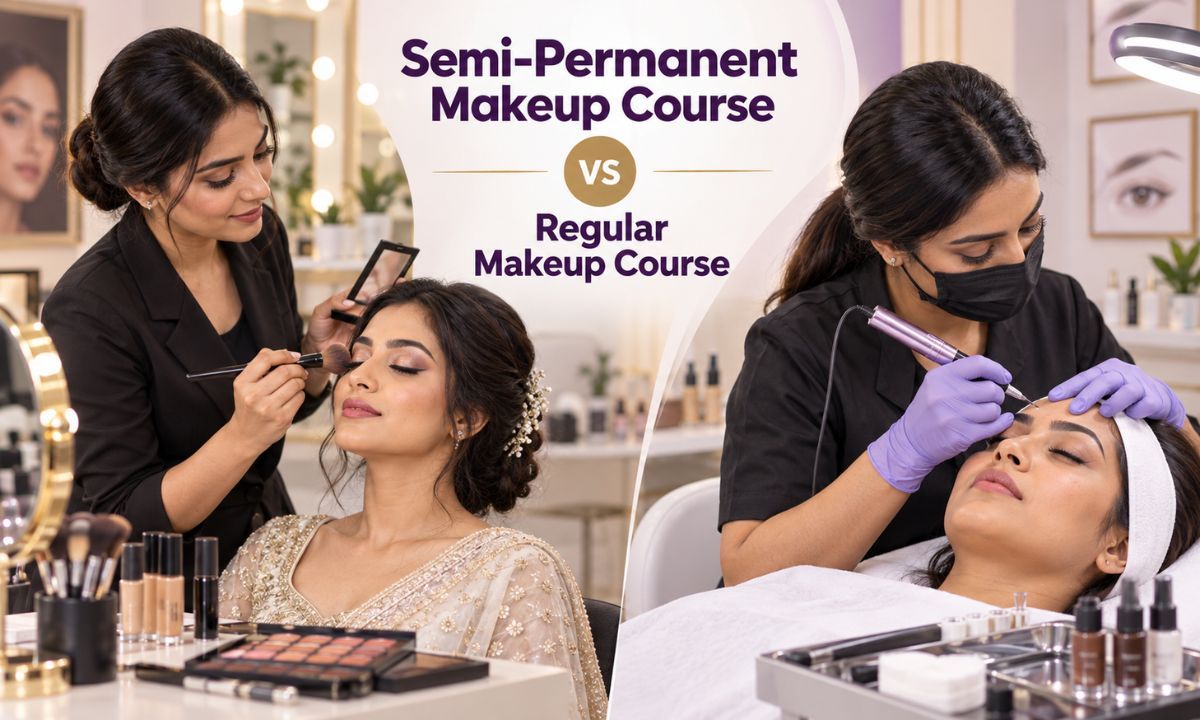
Semi-Permanent Makeup Course vs Regular Makeup Course
Semi-Permanent Makeup Course vs. Regular Makeup Course: What’s the Difference?
The beauty industry offers several career paths, including makeup artistry, skincare, hair styling and specialised cosmetic procedures. Students searching for a beautician course in Gurgaon may also come across regular and semi-permanent makeup programmes. Although these courses belong to the beauty field, they teach different techniques and prepare students for different professional roles.
A regular makeup course focuses on creating temporary looks using products such as foundation, concealer, eyeshadow and lipstick. Semi-permanent makeup training involves specialised tools and pigments used to create longer-lasting enhancements for areas such as the eyebrows and lips.
Students exploring makeup artist courses in Gurgaon should first understand the difference between these two options. Regular makeup training is generally broader and more creative, while semi-permanent makeup training is technical and focused on cosmetic pigmentation procedures.
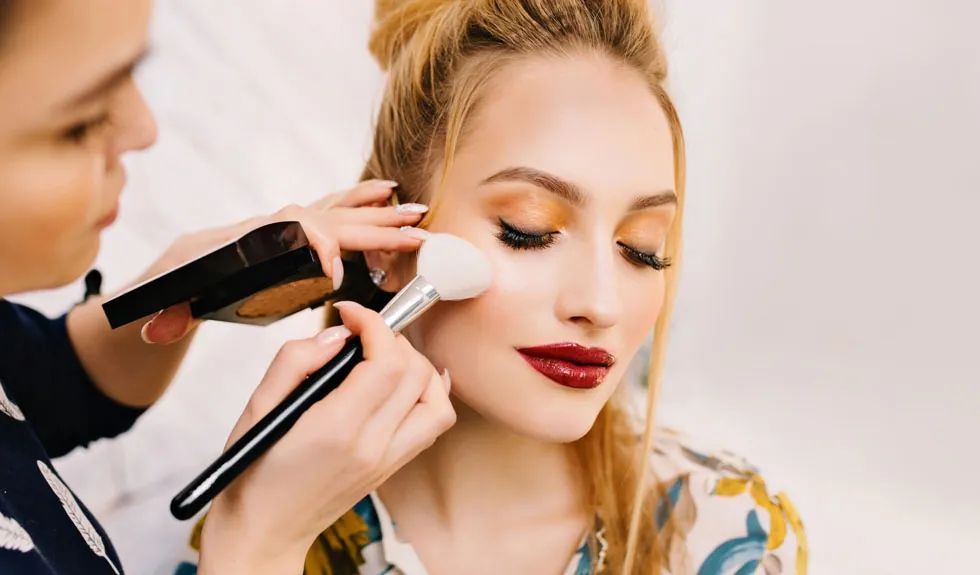
A professional makeup course in Gurgaon may cover bridal, party, fashion, editorial and camera-ready makeup. Semi-permanent makeup training, on the other hand, may include microblading, powder brows, ombré brows, lip blush and related pigmentation techniques.
It is also important to understand that a makeup artist and a beautician do not always perform the same work. You can read our guide on Makeup Artist vs Beautician: What’s the Real Difference? to understand their skills, services and career paths before selecting a course.
Choosing the right makeup artist course depends on your interests and professional goals. If you enjoy creating different looks for brides, models or events, regular makeup artistry may be suitable. If you are interested in precise, longer-lasting brow and lip services, semi-permanent makeup may be a better specialisation.
What Is a Regular Makeup Course?
A regular makeup course teaches students how to create temporary makeup looks for different skin types, face shapes and occasions. The products remain on the surface of the skin and can usually be removed using a suitable cleanser or makeup remover.
Depending on the programme level, students may learn:
- Skin preparation and skincare basics
- Face shapes and skin types
- Colour theory and correction
- Foundation and concealer application
- Contouring and highlighting
- Eye, eyebrow and lip makeup
- Bridal and party makeup
- Fashion and editorial makeup
- HD and airbrush techniques
- Product and brush knowledge
- Makeup hygiene and sanitation
- Client consultation
- Portfolio development
This training is suitable for students who want to work with brides, models, salons, production teams, fashion professionals or private clients.
What Is a Semi-Permanent Makeup Course?
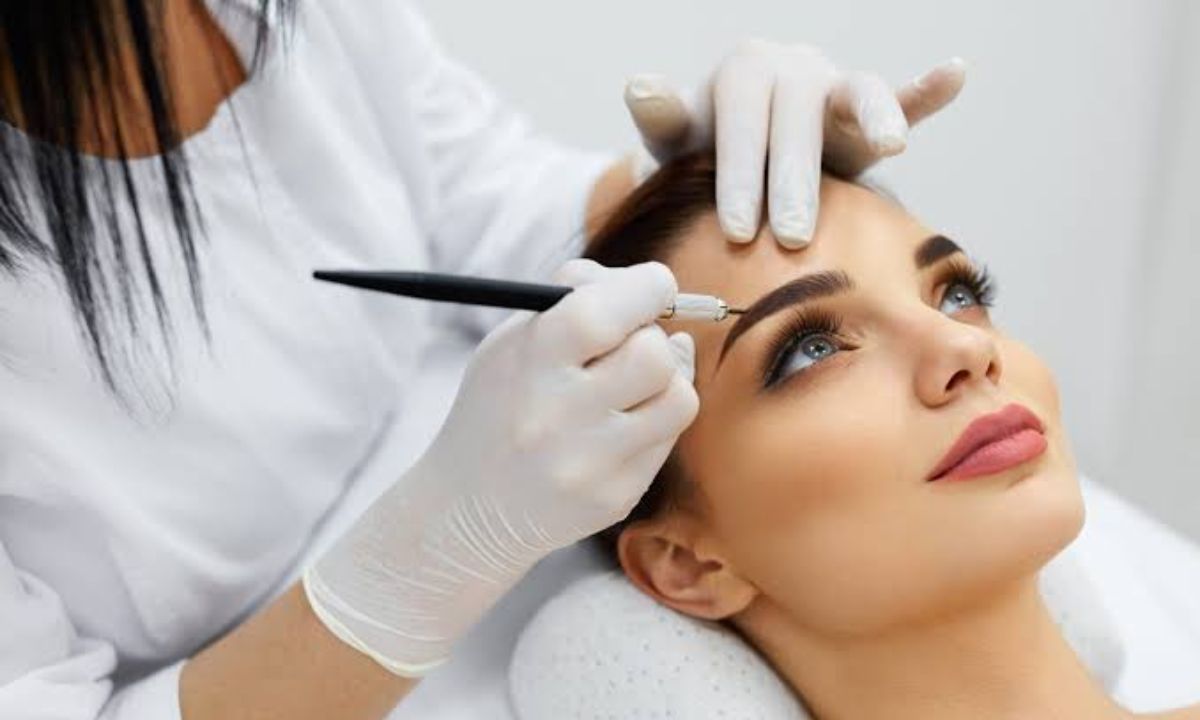
A semi-permanent makeup course provides specialised training in cosmetic pigmentation. These procedures use professional pigments and equipment to enhance selected facial features for an extended period.
Depending on the curriculum, students may learn:
- Microblading
- Microshading
- Powder or ombré brows
- Lip blush
- Brow mapping and shaping
- Pigment and colour theory
- Skin assessment
- Equipment handling
- Hygiene and infection control
- Client consultation
- Contraindications
- Healing stages and aftercare
Unlike regular makeup, semi-permanent procedures involve controlled pigment placement within the skin. Therefore, proper technical knowledge, precision, hygiene and supervised practical training are essential.
Semi-Permanent Makeup Course vs Regular Makeup Course
| Factor: Regular Makeup Course/Semi-Permanent Makeup Course | ||
| Main purpose | Creates temporary makeup looks | Creates longer-lasting cosmetic enhancements |
| Application | Products are applied to the skin’s surface | Pigment is placed within the skin using specialised techniques |
| Common services | Bridal, party, fashion and media makeup | Brow enhancement, microblading and lip blush |
| Products and tools | Cosmetics, brushes and applicators | Pigments, needles, cartridges and specialised equipment |
| Core skills | Blending, application and creative styling | Mapping, pigmentation and technical precision |
| Results | Usually last for several hours | Gradually fade over an extended period |
| Hygiene level | Important | Critical |
| Aftercare | Makeup removal and skincare advice | Detailed healing and aftercare instructions |
| Career options | Makeup artist, bridal artist or freelancer | PMU, brow or cosmetic pigmentation specialist |
| Ideal for | Students interested in creative makeup | Students interested in technical beauty procedures |
Temporary Makeup vs Longer-Lasting Enhancements

Regular makeup products such as foundation, blush, eyeshadow and lipstick stay on the skin’s surface. Artists can change the look according to the occasion, outfit, lighting and client preference.
Semi-permanent makeup uses specialised techniques to deposit cosmetic pigment into the skin. Its results last longer but gradually fade because of factors such as skin type, technique, pigment selection, lifestyle and aftercare.
Therefore, semi-permanent makeup is not simply regular makeup that lasts longer. It is a specialised procedure requiring additional technical and safety training.
What Do You Learn in a Regular Makeup Course?
Regular makeup artistry combines creativity, product knowledge and practical application. Students learn how to select suitable products, understand facial features and create balanced looks for different clients.
Practical training generally helps students develop skills in:
- Product selection and application
- Foundation shade matching
- Blending and colour correction
- Eye and lip techniques
- Bridal and occasion makeup
- Working with different face shapes
- Client communication
- Hygiene and tool maintenance
- Portfolio creation
Consistent practice is essential because professional results depend on control, symmetry, colour selection and the ability to customise every look.
What Do You Learn in Semi-Permanent Makeup Training?
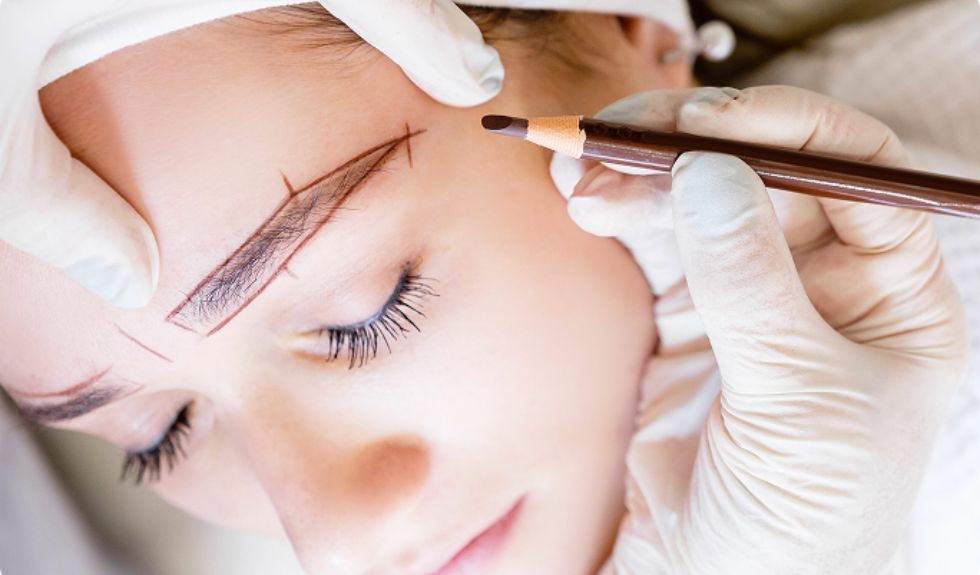
Semi-permanent makeup training is more procedure-focused. Students need to understand facial anatomy, skin conditions, pigment behaviour, brow mapping, equipment handling and the healing process.
A well-structured programme should cover:
- Skin and facial anatomy
- Pigment and undertone selection
- Brow mapping and symmetry
- Safe equipment handling
- Hygiene and sanitation
- Client consultation and consent
- Contraindications and treatment suitability
- Healing stages and aftercare
- Supervised practical training
Online videos cannot replace professional instruction and supervised practice, especially when a procedure involves direct work on the skin.
Hygiene and Safety Requirements
Hygiene is important in every beauty service, but it becomes critical in semi-permanent makeup.
Training should explain:
- Hand and workstation hygiene
- Cleaning and disinfection procedures
- Safe handling of equipment
- Use of disposable materials
- Prevention of cross-contamination
- Client consultation and consent
- Skin assessment
- Contraindications
- Post-procedure care
Students should select an academy that provides supervised practical learning and follows appropriate professional safety standards.
Career Opportunities After a Regular Makeup Course
Regular makeup training can support career opportunities such as:
- Bridal makeup artist
- Freelance makeup artist
- Salon makeup artist
- Fashion makeup artist
- Editorial makeup artist
- Film and television makeup artist
- Event makeup artist
- Beauty consultant
- Makeup educator after gaining experience
A certificate alone does not guarantee professional success. Students also need practical ability, a strong portfolio, good client communication, hygiene and continued skill development.
Career Opportunities After a Semi-Permanent Makeup Course
Specialised semi-permanent makeup training can support career paths such as:
- Semi-permanent makeup specialist
- Microblading artist
- Brow specialist
- Lip blush specialist
- Cosmetic pigmentation practitioner
- Beauty professional offering specialised brow and lip services
Before offering these services professionally, practitioners should complete suitable training and check the certification, insurance and local requirements applicable to their work.
Which Course Is Better for Beginners?
A regular makeup course may be more suitable if you:
- Are completely new to makeup artistry
- Enjoy experimenting with colours and styles
- Want to work with bridal, fashion or event clients
- Want to build broad makeup skills
- Prefer non-invasive beauty services
A semi-permanent makeup course may suit you if you:
- Want to specialise in brows or lip enhancement
- Are comfortable performing technical procedures
- Have strong attention to detail
- Can follow strict hygiene protocols
- Want to offer specialised beauty services
Beginners looking for broader career opportunities can start with regular makeup artistry and later add semi-permanent makeup as a specialisation.
Can You Learn Both?
Yes. Learning both can help a beauty professional build a wider skill set and offer more services.
Regular makeup training develops creativity, colour knowledge, application techniques and client-handling skills. Semi-permanent makeup training adds specialised knowledge of pigmentation, equipment, safety and aftercare.
However, completing a regular makeup programme does not automatically qualify someone to perform semi-permanent procedures. Both fields require dedicated training and sufficient practical experience.
How to Choose the Right Course
Before enrolling, consider the following factors:
- Career goal: Decide whether you want to become a makeup artist or specialise in cosmetic pigmentation.
- Course curriculum: Review the exact techniques and subjects included.
- Practical training: Choose hands-on training instead of a theory-only programme.
- Trainer experience: Check the qualifications and professional experience of the trainers.
- Hygiene standards: Review the academy’s safety and sanitation practices.
- Certification: Understand who provides or recognises the certification.
- Student portfolios: Examine genuine work completed by previous students.
- Career support: Ask about portfolio building, internships and placement assistance.
- Fees and kit: Confirm what is included in the total course fee.
Do not select a programme only because it is inexpensive or short. Poor training can limit your career development and may create serious safety risks in semi-permanent procedures.
Begin Your Professional Makeup Journey with VLCC
The right training offers more than a certificate. It helps students develop practical ability, professional discipline, product knowledge and confidence when working with clients.
VLCC School of Beauty provides career-focused beauty and makeup education supported by practical training, experienced faculty and industry-relevant learning. Explore the available programmes or speak with a course counsellor to choose training that matches your experience and professional goals.